


A brief history of the museum’s collection
The collection of the Museu da Marioneta was established in the late 1990s with the incorporation of the archive and holdings assembled by Companhia Marionetas de São Lourenço e o Diabo, directed by Helena Vaz. This founding group included not only the puppets created by Helena Vaz for the company’s performances, but also stage machinery and props, as well as puppets from different geographical regions and cultural traditions.
With the establishment of the Museu da Marioneta in 2001 and its move to the former Bernardas Convent, the collection embarked on a process of continuous growth. Over more than two decades, acquisitions, donations and long-term deposits have built a collection of more than three thousand objects, including puppets, sets, stage props and paper theatres, among others.
Today, the Museum holds the most significant collection of puppets in Portugal.
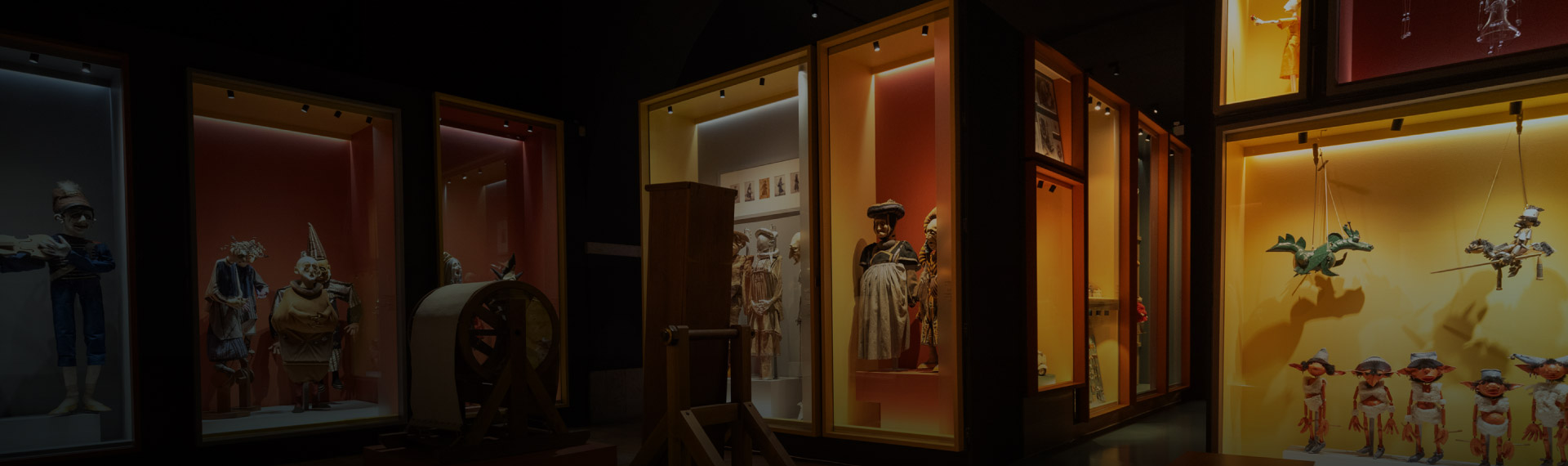
The Museum’s long-term exhibition takes visitors on a journey through cultures, techniques and imaginative worlds from different parts of the globe, revealing the versatility and multidisciplinary nature of puppetry, an art form that brings together sculpture, painting, music, literature, manipulation and performance techniques, among other disciplines.
Shadow, glove, string, stick, rod and mixed-manipulation puppets are displayed alongside puppets created for stop-motion animation, demonstrating the extraordinary range of forms puppetry can take and its enduring relevance.
One of the central sections of the collection is devoted to the history of puppetry in Portugal from the late nineteenth century onwards. Among the most emblematic pieces are the centuries-old Bonecos de Santo Aleixo, one of Portugal’s most important puppet theatre traditions, documented since the eighteenth century. The exhibition also features the popular Robertos, protagonists of traditional glove puppet theatre, represented by key figures such as Manuel Rosado, creator of the celebrated Procissão, as well as by contemporary artists such as José Gil of the S.A. Marionetas company.
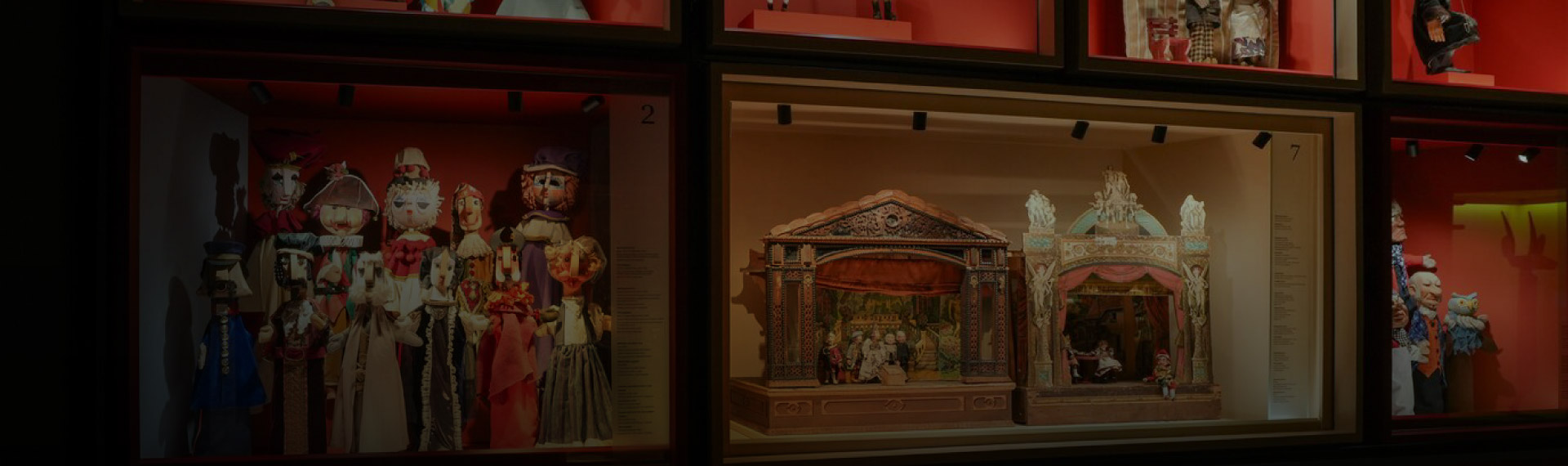
Alongside the Robertos are their well-known European “cousins”: Guignol from France and Punch & Judy from England. Despite their different origins and languages, these characters share similar narrative worlds populated by figures such as the devil, death, the policeman and the dragon, bearing witness to a shared heritage of European popular theatre.
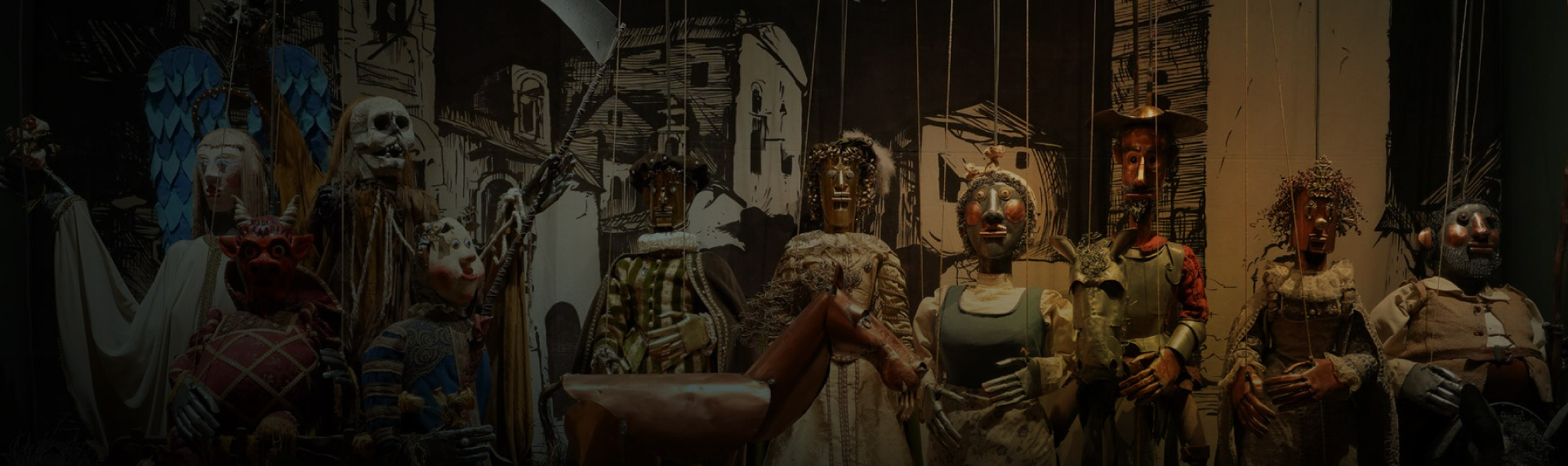
The creativity and renewal that characterised the 1970s and 1980s in Portugal are represented through the work of some of the country’s most innovative puppeteers, including Helena Vaz, Ildeberto Gama, Dalton Assef and José Carlos Barros. Also noteworthy is the remarkable group of puppets from Retábulo de Dom Quixote, belonging to the Museu Nacional do Teatro e da Dança. The set comprises thirty-five metal puppets manipulated by rods and strings.
The Museum also preserves important groups of puppets from various European countries, as well as from Asia and Africa.
From Africa, the Museum displays a rare group of puppets from Mali associated with the Sogobó ritual, an artistic and community practice of profound cultural significance.
The enrichment of the collection remains an ongoing priority for the Museum. In 2024 and 2025, important groups from Indonesia, China and Italy were acquired, including a rare portable theatre made in Milan. These acquisitions have strengthened the exhibition narrative through the diversity of puppet types and traditions represented from different parts of the world.
In recent years, the collection has also benefited from a remarkable number of donations, many of them made following the temporary exhibition A Revolução das Marionetas: 1970–1980. These puppets and props have helped recover artists and works and have brought new knowledge to the history of puppetry in Portugal during the final third of the twentieth century. They contribute to a more complete and objective understanding of one of the most creative periods in the history of Portuguese puppetry.
Open to all audiences, the Museum shares this heritage through its long-term exhibition and temporary exhibitions both within and beyond its own premises. It maintains an ongoing dialogue with puppeteers, researchers, artists and visitors, reaffirming puppetry as a living art form in a constant process of reinvention.