


Puppetry is an art form that runs throughout human history, present in every culture and in virtually every part of the world.
Over the centuries, it has brought communities together around myths, legends, religious narratives and accounts of everyday life, bringing reality and imagination together through a unique and universal artistic language, characterised by a sense of freedom.
Far more than an animated object, a puppet is an extraordinary means of expression and communication, bringing together a multitude of artistic disciplines and forms of knowledge: drawing, painting, sculpture, set design, dramaturgy, music, movement and performance.
Whether popular or scholarly, traditional or contemporary, playful or thought-provoking, puppetry is distinguished by its creative freedom and its ability to communicate with audiences of all ages. It is a boundless, timeless creative territory where almost anything seems possible.
It is this plural vision of the diversity of puppetry that the Museum is committed to preserving, studying and sharing.
Welcome to the Museu da Marioneta.
Ana Paula Rebelo Correia
Director
The Museum
The Museu da Marioneta is Portugal’s first museum entirely dedicated to the world of puppetry, its history and the many forms of expression found in puppet theatre, with particular emphasis on Portugal’s puppetry heritage.
Housed in the former Bernardas Convent in Lisbon, the Museum invites visitors to discover an ancient art form that spans cultures, generations and artistic languages. Through its collections, exhibitions and activities, it reveals the diversity of forms, techniques and imaginative worlds that make puppetry one of the most fascinating expressions of the world’s performing arts heritage.
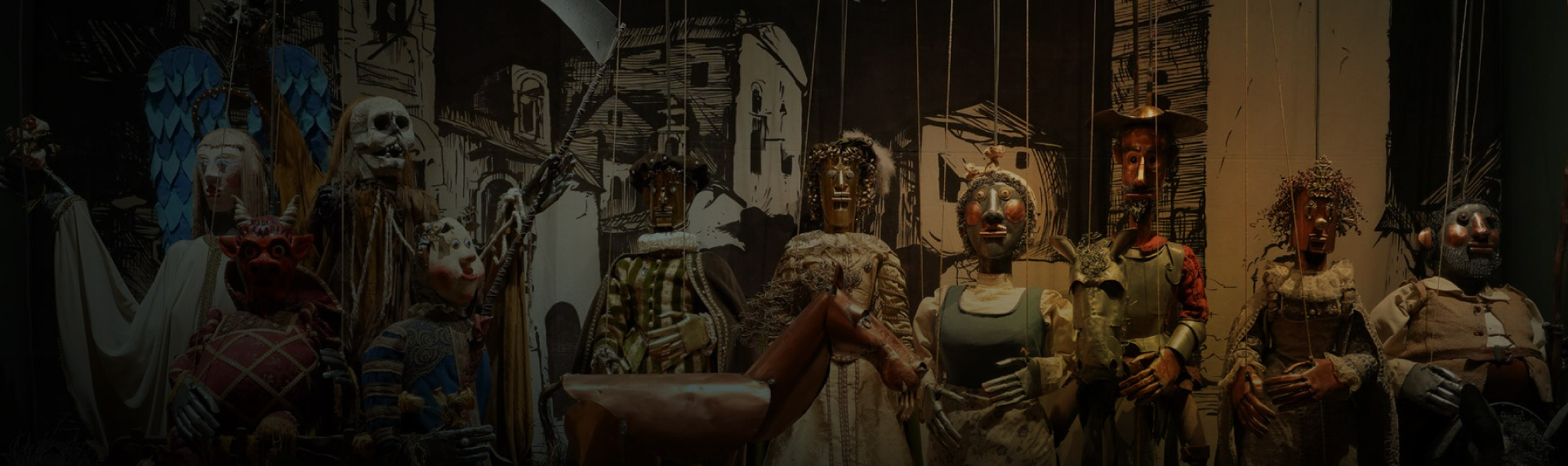
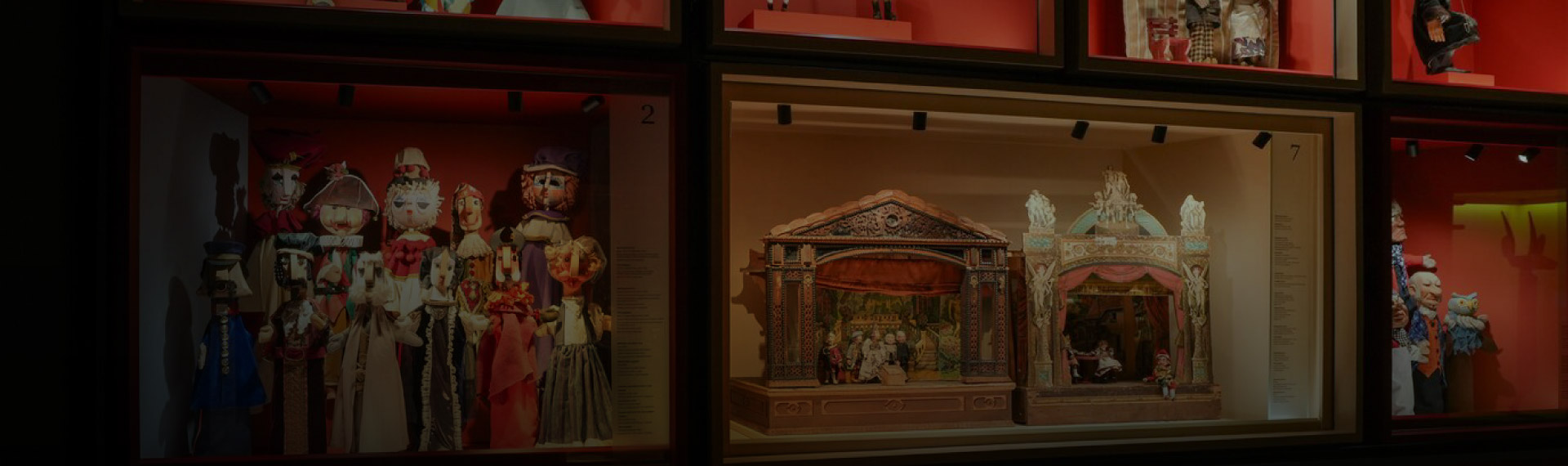
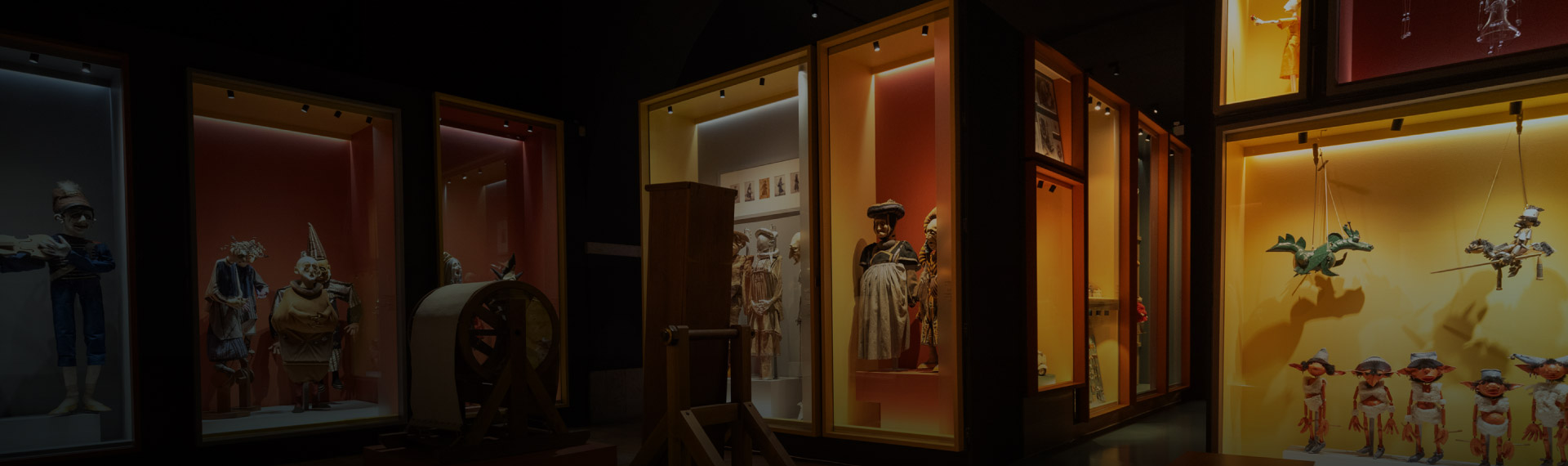
The collection comprises hundreds of pieces from different geographical regions and traditions, representing the main types of puppets and manipulation techniques. These include shadow puppets from Java, India, Turkey, China and Germany; glove puppets such as the celebrated Robertos, Guignol and Punch & Judy; string puppets from Europe and Asia; rod puppets, including the emblematic Bonecos de Santo Aleixo; puppets combining different manipulation techniques (rod, stick and strings), such as the Sicilian Pupi; as well as paper theatres from Germany, the Czech Republic and Italy.
One of the central sections of the permanent exhibition is devoted to puppetry in Portugal, with particular emphasis on the 1970s and 1980s, a decisive period in the renewal of the art form. Some of Portugal’s leading creators are represented through characters and productions that have shaped the recent history of puppet theatre. Highlights include creations by Helena Vaz, the Companhia Marionetas de São Lourenço e o Diabo, as well as works by José Carlos Barros, Ildeberto Gama, Dalton Assef and many other artists.
The collection also includes groups of exceptional heritage value, such as the Sogobó puppets from Mali, which bear witness to the richness and diversity of puppetry in the region.
The final room of the exhibition is dedicated to stop-motion animation, where visitors can discover puppets created for animated films and explore the processes that bring them to life on screen.
Serving audiences of all ages, the Museum promotes knowledge, research and appreciation of puppetry through its permanent exhibition, temporary exhibitions and close collaboration with contemporary puppeteers, puppet makers and artists. This living relationship between heritage and contemporary creation allows the Museum to present puppetry both in its traditional forms and in its most innovative and experimental expressions.
The Education Department is a fundamental part of the Museum’s work. Through guided visits, workshops, long-term projects and interdisciplinary programmes, it brings audiences closer to puppetry in its many forms and develops initiatives exploring the creation, construction and manipulation of puppets, as well as their relationship with other artistic disciplines.
Activities are aimed at audiences of all ages, encouraging curiosity, creativity, discovery and an appreciation of puppetry.
Since 2025, the Museum has also been home to Companhia Teatro do Museu, a resident artistic company that stages performances inspired by the collections, exhibitions and educational projects, strengthening the connection between museum heritage and contemporary theatre-making.
The Museu da Marioneta has a Documentation Centre, which houses an important specialist library covering different periods, traditions, techniques and geographical areas of puppetry. It also holds a significant visual and audiovisual archive, comprising posters, programmes, leaflets, photographs, drawings, video recordings and other materials documenting the history, artists, performances and practices associated with puppet theatre.
The former convent church has been adapted into a performance and exhibition space, providing a unique setting for artistic creation and engagement with audiences.
Mission
The Museu da Marioneta’s mission is to research, preserve, promote and disseminate puppetry, with a particular focus on its expression in Portugal, fostering knowledge and appreciation of this artistic heritage among diverse audiences.
The Museum’s work centres on two complementary areas: the puppet as an object of heritage, through its study, conservation and musealisation; and the puppet as a living art form. On the one hand, the Museum preserves and researches puppets, documents and other records that form part of its collection and which have found a new context for interpretation and meaning within the Museum. On the other, it maintains close relationships with puppeteers, companies and contemporary artists, providing space for creation, experimentation and the regular presentation of performances.
This ongoing connection between heritage and artistic creation is one of the Museum’s defining characteristics. By bringing its collections into dialogue with contemporary practice, the Museum contributes to the recognition of puppetry as a dynamic cultural expression in constant renewal.
A brief context
The Museu da Marioneta, opened in 2001, occupies a building with more than three centuries of history. Housed in the former Bernardas Convent, founded by King João IV in 1653 to accommodate nuns of the Order of St Bernard, it is now a place where traces of the past coexist with artistic and cultural creation in the present.
One of the first surprises for visitors lies in the building’s architecture itself. The staircase leading to the exhibition rooms reveals how the convent was adapted to the site’s steep topography. As a result, the church and cloister are located three storeys above street level, an unusual feature that gives the building its distinctive character. The former chapter rooms, library and other conventual spaces now house the Museum’s collection.
The 1755 Earthquake caused extensive damage to the complex. Following a lengthy period of reconstruction, the convent was once again occupied in 1786. With the dissolution of the religious orders in 1834 and the departure of the last nuns in 1850, the building acquired new uses and new lives. It became a school, a cinema-theatre and, above all, a residential building. For more than a century, it housed hundreds of residents and underwent successive alterations that profoundly changed its original configuration. Almost all of the convent’s artistic and religious furnishings disappeared.
In 1997, Lisbon City Council acquired the building and launched an extensive programme of rehabilitation and restoration. A unique project was born: to transform a former place of enclosure into a space for encounter, exchange and cultural creation. It was in this context that the Museu da Marioneta found its home here. On the upper level of the cloister, the former monastic cells were restored and converted into social housing, which is now home to 34 families.
Over more than two decades, the Museum has grown in close collaboration with artists, companies, collectors and researchers. Its collection has been enriched through acquisitions, as well as through important donations and long-term deposits, which continue to expand knowledge of and support the preservation of puppetry.
At the beginning of 2025, the permanent exhibition was renewed through a new museographical design by António Viana. This intervention made it possible to incorporate the most recent additions into the Museum’s narrative, strengthening the prominence given to Portuguese puppetry and offering visitors a broader and more up-to-date interpretation of the collection.